Across Africa, millions of young people have the talent, curiosity and ambition to create solutions that can change the world. What many lack is not ability, but access to the right tools, training and opportunities.
In March 2025 , SMAIR Foundation and AI & Robotics Innovation Technologies began a journey built around one simple belief: every child, regardless of background, deserves the opportunity to become an innovator.
One year later, that belief has grown into classrooms filled with young builders, innovative student projects, partnerships with schools, professional training programmes and a growing community committed to building Africa’s technological future.
It Started With a Small Bootcamp
The journey began with a pilot bootcamp.
There were only a handful of students, a room filled with curiosity and a belief that practical AI and robotics education could help young people see technology differently.
That first programme quickly showed what was possible.
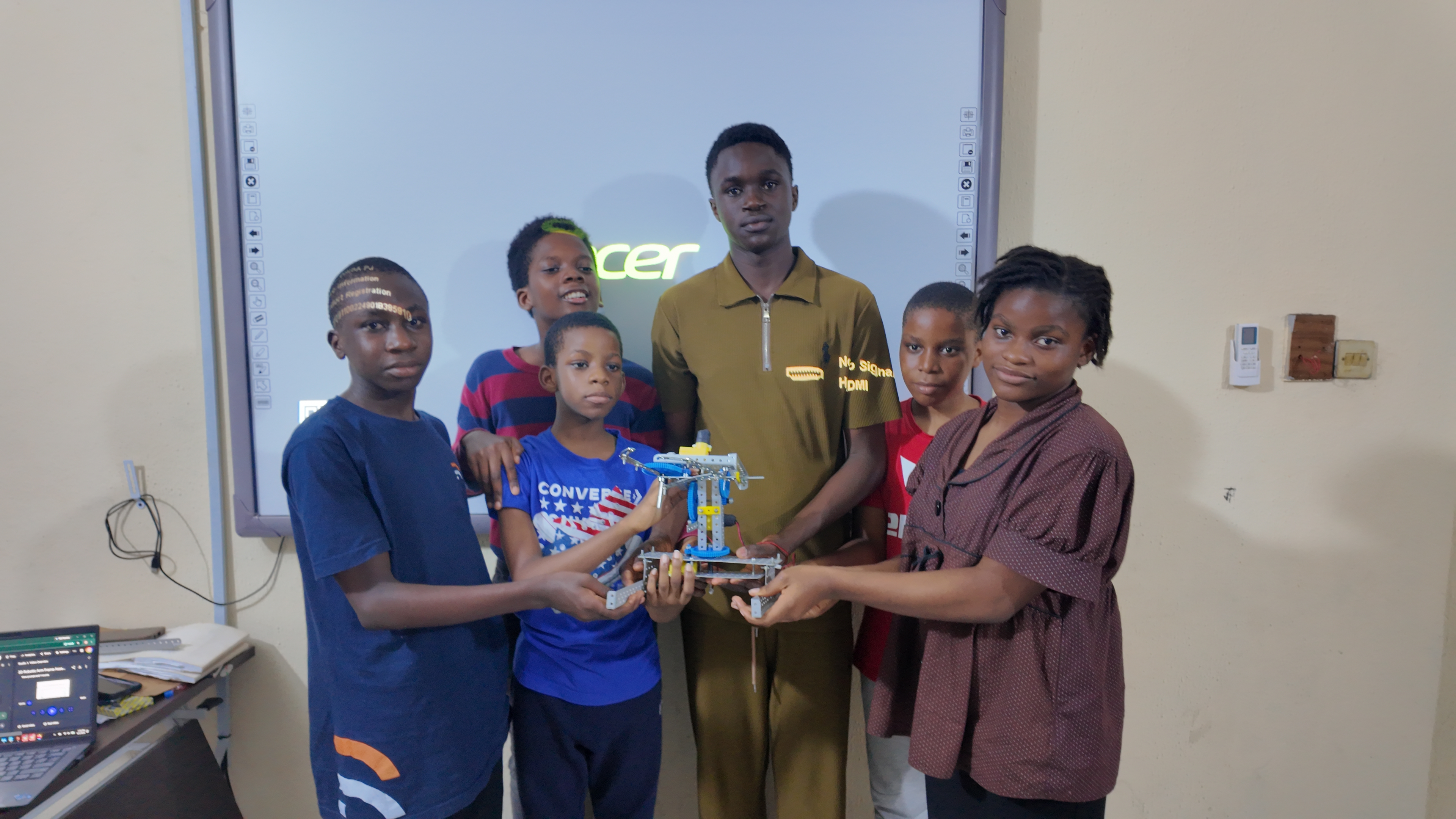
Students were not simply learning theories about technology. They were building, experimenting, testing ideas and solving problems with their own hands.
From there, the vision expanded into weekend robotics clubs, intensive bootcamps, school workshops and professional training programmes.
From Learning Technology to Solving Problems
At SMAIR Foundation, the goal has never been to teach robotics simply for the sake of building robots.
Students are encouraged to identify real problems around them and think about how technology can provide solutions.
Within the first year, students developed projects including:
Smart dustbins
Temperature-controlled fans
Autonomous planting robots designed around food-security challenges
Obstacle-avoiding robots
IoT home-control systems
Traffic-light simulations
Robotic football projects
Each project represented something bigger than the technology itself.
It represented a young person looking at a problem and believing, “I can build a solution.”
One of the projects explored the use of robotics in agriculture, with students discussing how automation could improve accuracy, efficiency and sustainability in food production.
These young innovators are not waiting for someone else to build Africa’s future. They are beginning to build it themselves.
Nearly 1,000 Learners Reached
During its first year, SMAIR Foundation and AI & Robotics Innovation Technologies trained and certified more than 996 students and professionals .
The organisation also partnered with eight schools across Nigeria , helping introduce AI and robotics education to more young people.
Students participating in the programmes have also received certifications connected to global technology organisations, further exposing them to internationally recognised digital and technical skills.
But the biggest impact cannot be measured only by numbers.
It can be seen in the parent watching their child confidently explain a project they built.
It can be seen in the teacher who discovers what technology education can offer their students.
And it can be seen in the young learner who enters a classroom uncertain about technology and leaves believing they can become an engineer, programmer, researcher or inventor.
Creating Opportunities Beyond the Classroom
The first year also provided opportunities for students to experience technology beyond their regular learning environment.
SMAIR Foundation celebrated the International Day of the Girl Child , reinforcing the belief that girls deserve equal opportunities to see themselves as engineers, innovators and technology leaders.
The organisation also introduced robotics programmes to schools, giving more children the opportunity to interact with emerging technologies, sometimes for the first time.
SMAIR's work was also showcased on national television, helping bring greater attention to the importance of accessible STEM, AI and robotics education for African children.
Connecting Education, Research and Industry
While SMAIR Foundation focuses strongly on developing young minds, AI & Robotics Innovation Technologies extends that vision into research, professional development and industry.
During the year, the organisation trained corporate professionals, participated in innovation exhibitions and technology conferences, and hosted conversations around the future of technology and innovation in Africa.
The organisation has also continued building relationships with schools, universities, businesses, government institutions and other stakeholders.
This reflects an important part of the vision: lasting technological development cannot happen in isolation.
Education must connect with research. Research must connect with industry. And innovation must ultimately create real-world impact.
The First Year Is Only the Beginning
Every student trained represents a seed.
A student learning robotics today could become tomorrow's engineer.
Another could become an entrepreneur building technology solutions for African communities.
Another could become a researcher.
And another could become a teacher who introduces hundreds of young people to technology.
The vision remains clear: to empower a new generation of AI and robotics innovators through solution-driven, accessible and affordable technology education.
The aim is not simply to prepare African students to consume the technologies of the future.
It is to prepare them to build them .
From a small pilot bootcamp in March 2025 to hundreds of trained students, school partnerships, innovative projects and growing industry collaborations, the first year has shown what can happen when young people are given access, mentorship and the freedom to create.
And this is only the beginning.
One student. One project. One breakthrough at a time.